The Liverpool Ectoplasm Crisis
The RookThe Liverpool Ectoplasm Crisis is a sudden supernatural emergency in which an Argentine government official manifests animals made of ectoplasm in the middle of Liverpool and cannot control them. Myfanwy Thomas directs the Checquy’s response: she mobilizes local teams, brings in nearby trainees from the Estate, and cuts the city’s communications and power to impede coverage. The event ends when the woman dies and the constructs evaporate, but the response leaves four initial civilian deaths, three more reported later, widespread disruption, and a carefully managed public explanation.
Causes and Initial Emergency
The crisis begins when a visiting Argentine government official spontaneously manifests ectoplasmic animals in Liverpool. The animals are beyond her control, and their presence prevents anyone from approaching her. Myfanwy receives the emergency through the organization’s alert system: lights in the Rooks’ offices are connected to the Panic Lines, while a major incident also triggers her desk phone, mobile phone, and computer screens. The multiple alerts mark the beginning of a response that quickly becomes a test of both supernatural intervention and information control.
The initial reports establish the scale of the danger before Myfanwy has the full picture. Four civilians have died, property damage is estimated at thousands of pounds, and the official appears to be undergoing a breakdown. A herd of ghostly green tarucas, jaguars, and llamas surrounds her. The combination of civilian casualties, uncontrolled constructs, and an inaccessible central figure makes this more than a routine containment problem: local responders warn that the situation may be beyond their capacity.
Checquy Response and the Blackout
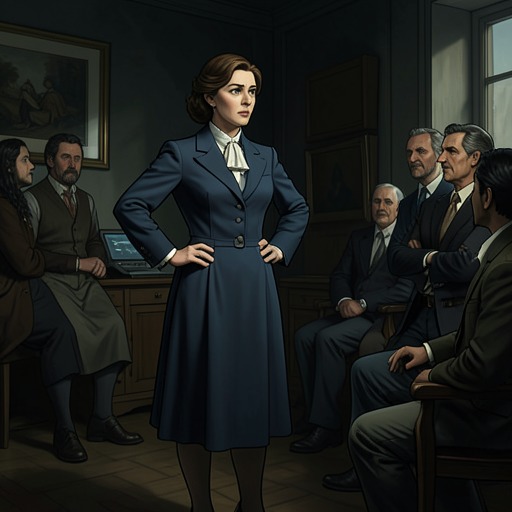
Myfanwy coordinates with the shift commander at the Crisis Office in London. When asked whether troops have been mobilized, she learns that Liverpool teams are already responding or en route, but the commander doubts they can handle the emergency. She consults a spreadsheet, identifies a team of final-year trainees from the Estate conducting covert maneuvers half an hour from the city limits, and proposes dispatching them for initial assistance. She checks the school charter to confirm that this deployment is legal, then asks Ingrid to inform Frau Blümen.
At the same time, Myfanwy treats the possibility of public exposure as an operational threat. With no press crews reported at first, she orders Liverpool’s communications cut, then asks how dark it is in the city. Once told that it is already dark, she orders a blackout. She explains that Rookery technicians have established backdoor computer access to power facilities in the sixteen largest cities in the United Kingdom, a project she initiated nine months earlier. The infrastructure makes it possible to plunge Liverpool into darkness; the blackout is intended to make it difficult for journalists to learn what happened and difficult for anyone to record it.
The restrictions do not keep the emergency contained indefinitely. Later, the Crisis Office reports three additional deaths and two more news crews in the area. Myfanwy asks whether the Barghests need to be sent, but Lewis reports that the teams are closing in on the target. The official then goes down and is confirmed dead. With her death, the animal constructs evaporate, allowing the Checquy to move from immediate containment to recovery and concealment.
Death, Restoration, and Cover Story
After confirmation of the official’s death and the disappearance of the constructs, Myfanwy orders the woman removed and instructs responders to sweep up incriminating material. She also orders the city’s lights and phones restored in ten minutes. She then directs the return of services and notes that only thirty-one minutes have passed. Her brief satisfaction at the speed of the response is immediately undercut by the practical fallout: calls arrive from senior figures in the Home Office, the Department for Environment, Food, and Rural Affairs, Liverpool City Council, Liverpool Police Department, the power company, and the Royal Society for the Prevention of Cruelty to Animals.
Caspar Dragoslevic reports that the blackout and the congestion caused by people trying to leave Liverpool kept news crews away from the incident’s center. More importantly for the cover-up, the ectoplasm did not register on either film or digital cameras. The event was therefore witnessed but could not be documented by the crews who reached the outskirts. Dragoslevic proposes a deliberately nonspecific explanation involving animals escaping from a cargo ship, a power outage, and looting. Because the crisis occurred in the business district at six in the evening during the middle of the week, he judges the number of witnesses manageable. His plan is to release some real animals and have them caught on television, giving the public’s reports of strange animals a visible, ordinary explanation. Myfanwy accepts the approach but warns against releasing dangerous animals in a way that could kill more members of the public.
The cover story is broadcast that evening, and Myfanwy describes the disaster as largely averted, though questions and a difficult cleanup remain. That assessment does not erase the cost of the response: the crisis has produced at least seven reported civilian deaths, significant property damage, and a blackout that affects a whole city. Nor does the fabricated explanation restore the original events to public view; it gives witnesses a competing account to accept while the Checquy clears evidence and returns services.
Significance
The crisis presents the Checquy’s emergency authority as both protective and intrusive. Myfanwy’s decisions are aimed at containing an uncontrolled supernatural event and limiting further harm, yet they also involve shutting down communications and electricity across Liverpool and manipulating what the public can see and report. The blackout is not merely a precaution around the response: it is an instrument of secrecy, made possible by technical access established months before the emergency.
The episode also distinguishes between managing a supernatural threat and managing the story that follows it. The ectoplasmic animals disappear with the official’s death, but witnesses, deaths, disrupted services, and unanswered questions remain. The Checquy’s solution therefore has two parts: responders contain the immediate danger, while Dragoslevic and the organization shape a plausible public account. Myfanwy’s caution about releasing animals underscores the tension within that second operation: a cover story may help conceal the extraordinary event, but its staging must not create further civilian casualties. The crisis closes as an operational success in the limited sense that the city’s services return and the supernatural constructs are gone, while the human and civic costs persist beneath the explanation broadcast to the public.